
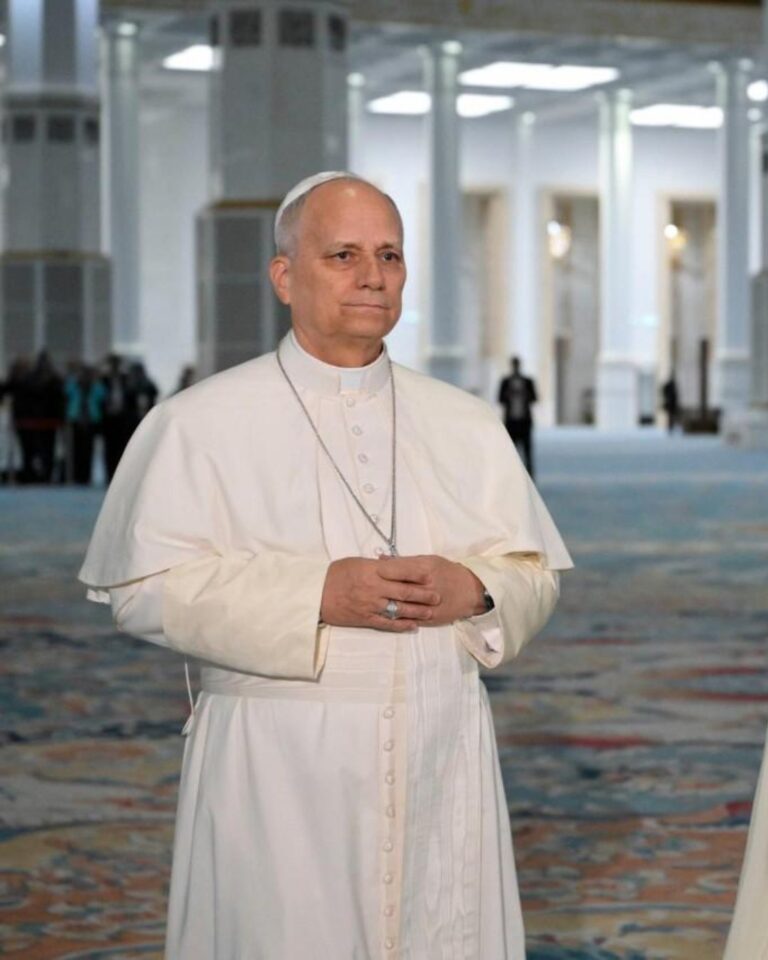
Pope Leo XIV will not require further treatment for lung cancer after surgery successfully removed the cancerous tissue, the Vatican has said.
The Vatican press office made this known in a medical bulletin on Wednesday.
This followed the completion of tests on tissue removed during the pontiff’s surgery last week.
According to the bulletin, final histological reports and molecular biology analyses confirmed that the disease was a pulmonary adenocarcinoma and was localised.
“The results have confirmed that the condition was a pulmonary adenocarcinoma and that the disease was localized.
“A subsequent oncological evaluation has confirmed that no further therapy is required,” the bulletin stated.
Pulmonary adenocarcinoma is the most common type of lung cancer, accounting for about 40 per cent of cases.
It often affects non-smokers and can develop relatively slowly.
Leo announced on October 11 that he needed surgery for a lung nodule, prompting concern within and outside the Vatican.
Doctors subsequently removed the affected lobe of his left lung during a hospital stay in Rome.
He returned home on October 17.
The following day, the pontiff made his first public appearance since the diagnosis, leading the Sunday Angelus prayer from the balcony of the Apostolic Palace.
Reflecting on his experience, Leo told worshippers, “This experience has given me a profound sense of closeness to all those who are going through illness or a state of infirmity.”
CNN reported that the pope’s recovery had been faster than is typical following such surgery, citing Dr Juanita Mora, a national medical spokesperson for the American Lung Association who was not involved in his treatment.
Mora said doctors would likely continue monitoring the pontiff through follow-up CT scans every three to six months during the first few years, followed by annual checks to detect any possible recurrence.
She added that patients recovering from such surgery often undergo respiratory physiotherapy to restore their breathing capacity.
