
By Winnie Onu, Makurdi
The Benue State government has reaffirmed its commitment to preventing gender-based violence (GBV) and strengthening coordinated response mechanisms, urging stakeholders to ensure that survivors receive timely support and are not pressured into silence to protect family or community reputations.
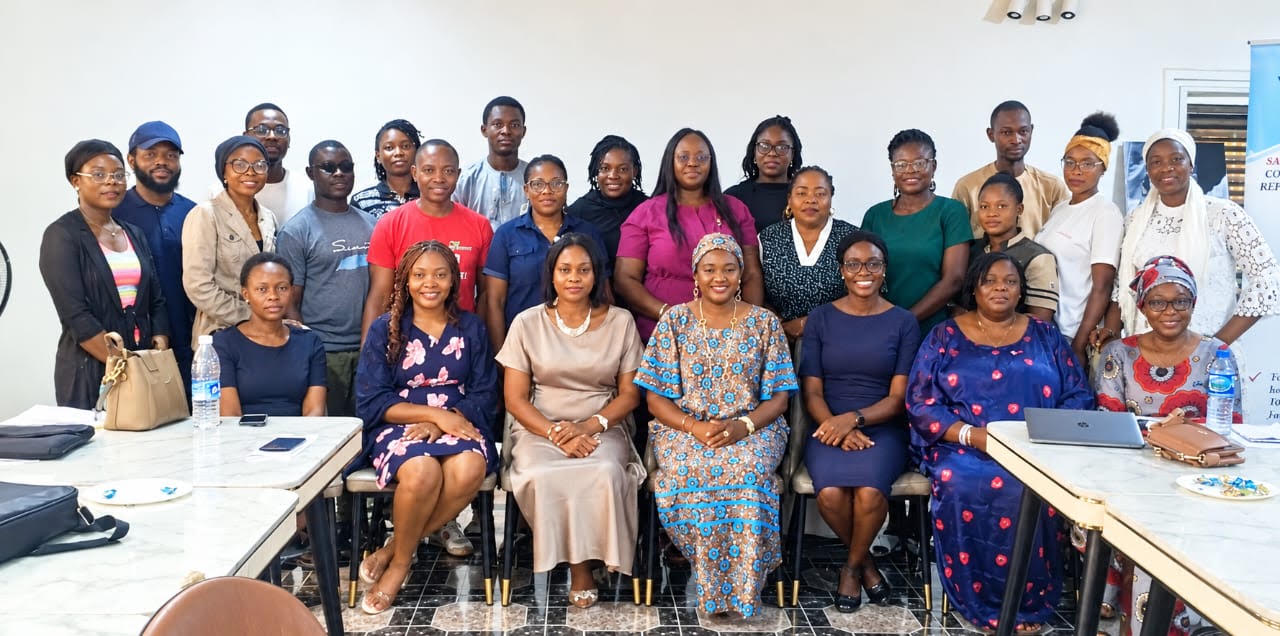
The Commissioner for Women Affairs and Social Welfare, Mrs Theresa Odachi Ikwue, stated this at the weekend through the Director of Planning, Research and Statistics in the ministry, Nguseer Vivien Torbunde, at the stakeholders’ engagement and inception meeting of the Safe Pathways Project in Makurdi.
The project, titled Strengthening Coordinated Gender-Based Violence Response and Referral Systems in Benue State, is being implemented by the Spring of Hope for the Girl-Child Development Initiative (SHoGDI), in partnership with the Benue State Ministry of Women Affairs and Social Welfare, with funding support from AmplifyChange.
Ikwue described GBV as a human rights violation that undermines the health, wellbeing, education, livelihoods and social participation of survivors.
She maintained that no cultural practice, tradition, relationship or circumstance should justify violence, stressing that survivors must be treated with dignity, confidentiality and respect while being supported to make informed decisions about their safety and access to justice.
The commissioner said the state government, under Governor Hyacinth Alia, remained committed to protecting vulnerable persons and improving access to support services.
She explained that the Safe Pathways Project would address gaps in the existing response system through the development of a statewide GBV Response Protocol and Referral Pathway, alongside a digital dashboard for reporting, referral tracking and monitoring.
She added that the ministry would provide leadership and work with relevant institutions to integrate the intervention into existing structures rather than create parallel systems.
Presenting an overview of the project, SHoGDI Executive Director, Mimi Ihundu, identified the absence of a unified, state-specific GBV response protocol, the gap between existing policies and service delivery, inadequate consolidated data and difficulties faced by survivors in accessing services as major challenges the initiative seeks to address.
She noted that women, girls and persons with disabilities in conflict-affected and displacement settings faced additional risks of violence, exploitation and limited access to care.
Ihundu said the project would begin with a baseline assessment involving key informant interviews and focus group discussions across Benue’s 23 local government areas to identify available services, referral gaps and barriers to care.
The findings, according to her, would be validated through consultations involving government agencies, service providers, community leaders, survivors and organisations of persons with disabilities across the state’s three senatorial zones before the development and validation of a coordinated response protocol.
She explained that the initiative would also develop and deploy a digital dashboard to improve GBV reporting, referral tracking and response monitoring, with pilot testing in three selected local government areas and capacity-building for designated users and service providers.
Also, routine monitoring, quarterly reviews and an endline evaluation would assess progress and establish arrangements for sustained government ownership.
According to her, the project targets at least 4,600 survivors of sexual and gender-based violence for direct benefits and 10,000 women and girls for indirect benefits through improved access to sexual and reproductive health services.
Providing an update on existing response structures, the Director of Women Affairs in the ministry, Mimi Elohor Tion, said the Sexual Assault Referral Centre (SARC) was providing services in Makurdi, although its operations remained limited.
She disclosed that work was ongoing to establish the centre at the Buhari Mother and Child Hospital, with plans to extend services to other parts of the state, including Gboko, Otukpo and Vandeikya.
According to Tion, personnel were available to attend to survivors in Makurdi, while efforts continued towards establishing a comprehensive, one-stop service.
Also speaking, Selumun Jagudu of the ministry said the state’s GBV Technical Working Group had been revived to strengthen coordination among response institutions and service providers.
She identified inadequate funding as a major challenge, explaining that caseworkers sometimes used personal money to assist vulnerable survivors who could not afford basic needs.
Jagudu called for increased funding for case management and data collection, expressing optimism that the inclusion of funding in the following year’s budget would help address some of the difficulties.
The GBV Specialist at the United Nations Population Fund (UNFPA), Adama Yusuf, called for regular training of GBV workers, noting that some personnel handling cases lacked the necessary training.
She stressed the importance of equipping service providers with the skills required to manage cases professionally and ensure that survivors received appropriate support.
In her goodwill message, the Executive Director of Okaha Women and Children Development Organization (OWACDO), Dr Joy Ijuwo, also advocated comprehensive GBV prevention, improved reporting and the revival of the state’s GBV database, pledging her organisation’s collaboration with other stakeholders.
Representatives of the ministries of Health, Ministry of Justice, the Benue State Emergency Management Agency (BSEMA), (Sexual Assault Referral Center (SARC), the Joint National Association of Persons with Disabilities (JONAPWD), Benue NGOs Network (BENGONET), Bureau for International Cooperation and Development (BICD), Civil Society Organisations in Benue State (CSO-B), the National Human Rights Commission and Bishop Murray Medical Centre, among others, delivered goodwill messages and pledged support for the initiative.
Participants emphasised the need for stronger institutional collaboration, reliable data collection and sharing, improved referral mechanisms and accountability to ensure that survivors were not abandoned between service providers.
Speaking on behalf of traditional rulers, the kindred head of Wurukum, Chief Ugondo Tov, pledged the support of traditional institutions in efforts to prevent and address GBV. He also called for proper record-keeping of cases to improve documentation and response.
The stakeholders stressed the need to challenge victim-blaming, harmful practices and social pressures that discourage survivors from reporting abuse or seeking help, particularly among women and girls with disabilities, displaced persons, children and people in underserved communities.
In his closing remarks, Victor Eboh, Esq., of Lawyers Alert, thanked the participating institutions and organisations for their attendance and commitment, describing the meeting as the beginning of a broader collaborative effort.
The project is expected to complement existing GBV prevention and response initiatives in Benue State by clarifying institutional responsibilities, strengthening referrals and improving accountability through a unified response protocol and digital monitoring system.
