
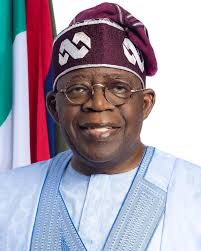
Three years ago today, Bola Ahmed Tinubu stood before the nation at Eagle Square and, in a moment that would define his presidency more than he perhaps intended, declared the fuel subsidy gone. No preamble. No cushioning. Just four words that would cascade into one of the most consequential and most painful economic ruptures in Nigeria’s post-military history. He was right that the subsidy had to go. Where his administration has fallen woefully short is in managing what came after.
It is worth stating plainly: this newspaper has never disputed the structural logic of the Tinubu reforms. A country spending trillions of naira subsidising fuel for the benefit of smugglers, currency arbitrageurs, and a narrow elite of large-vehicle owners was not running a welfare programme ,it was running a racket.
The foreign exchange unification was similarly overdue. Every credible economist had said so for years. The question was never whether to reform; it was always whether the government had the institutional muscle to carry ordinary Nigerians through the transition without breaking too many of them along the way.
Three years of evidence suggest the answer is decidedly mixed.
On the credit side of the ledger, the numbers are not trivial. Non-oil revenue has climbed past ₦20 trillion. The debt service-to-revenue ratio — which had ballooned to a suffocating 97 per cent has been driven below 50 per cent, a genuine stabilisation of the country’s fiscal position. Foreign reserves now stand at over $42 billion.
The Supreme Court victory on local government financial autonomy ended a long-running parasitic arrangement whereby governors treated federal allocations meant for Nigeria’s 774 LGAs as personal slush funds. The resolution of the OPL 245 dispute over one of Africa’s richest oil blocks, frozen for decades by litigation and diplomatic embarrassment cleared the path for an additional 150,000 barrels per day in production capacity.
The student loan programme under NELFUND, whatever its current implementation gaps, represents a first institutional attempt to keep low-income students in tertiary education rather than watch them drop out quietly and without recourse. These are real gains, and they deserve fair acknowledgement before any reckoning begins.
None of it, however, has translated into relief for the woman in Kano buying a 50kg bag of rice that now costs four times what it did in May 2023. The World Bank estimates that roughly 60 per cent of Nigeria’s population now lives below the poverty line. Headline inflation, while retreating from its catastrophic peak of over 33 per cent in early 2024, remains punishing in its cumulative weight on household budgets.
President Tinubu has formally declared poverty a national emergency. That is at least an honest acknowledgement of scale. But declarations are not programmes, and programmes are not results. The distance between those three things is precisely where this administration has struggled most.
The security picture is grimmer still. The administration has doubled the defence budget, procured foreign attack helicopters and fighter jets, and launched multiple military operations across several fronts. Yet tracking data compiled by civil society organisations places the death toll from violent insecurity since May 2023 at between 17,000 and nearly 20,000 an average of roughly 500 Nigerians killed every month. Plateau and Benue states have endured massacres of a frequency that no ministerial statement has adequately addressed.
The North-West’s kidnapping industry remains a going concern, with schools, highways and rural communities still terrorised by bandits who appear better armed, better motivated and better coordinated than the security forces deployed against them.
This matters beyond the raw horror of the statistics. Insecurity is systematically destroying Nigeria’s agricultural belts. Farmers cannot plant. Markets cannot function. The resulting food scarcity feeds directly into the inflation numbers that are making the reform project politically unsustainable. You cannot stabilise a macroeconomy with a gun permanently pressed against the supply chain’s neck.
What the administration appears not to have fully reckoned with is this: structural reforms that impoverish people in the short term only hold public legitimacy if citizens can see a credible connection between today’s sacrifice and tomorrow’s dividend. That connection has not been convincingly made. The government’s communication has lurched between triumphalism about reserve figures that mean nothing to a keke driver in Enugu and vague assurances about a light at the end of a tunnel whose length keeps extending.
A political economy built on deferred gratification requires, at minimum, a clear timeline and visible early wins at the household level. Neither has materialised with sufficient force.
The fiscal arithmetic also carries hazards the administration has not confronted honestly. Nigeria’s projected deficit has climbed to 4.4 per cent of GDP.
In the opinion of this newspaper, as this presidency enters its final stretch before the 2027 electoral reckoning, the challenge before Tinubu is not to defend his reform record it is to deliver it.
The macroeconomic scaffolding has been partially erected. What is still absent is the lived experience of improvement for the millions of Nigerians who were promised that pain now would purchase progress later. They want to travel without fear of abduction. They want food they can afford. They want schools safe enough to send their children to. They want a country that works. That is not too much to ask of any government, let alone one that promised to renew hope. They are still waiting. They are right to keep asking. They need real answers, not further assurances. Time, after all, is not unlimited and neither is patience.
-LEADERSHIP EDITORIAL
